 AC Consultance
1 - A simple (and useful) definition of a SOC
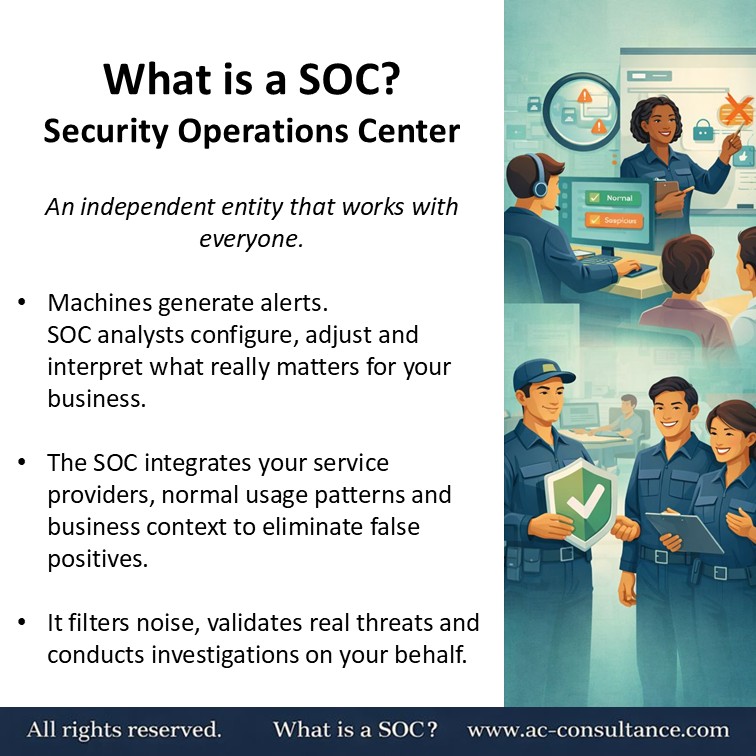
A SOC is the team and the setup that turn technical signals (logs, alerts, network behavior) into security decisions and actions. It is not about "monitoring people" but about monitoring systems: defining what is normal, spotting what deviates from normal, and qualifying what is truly dangerous. A SOC provides continuous, structured, and above all traceable visibility: who saw what, when, with what evidence, and which action was triggered.
- An operational capability, not an off-the-shelf tool.
- Goal: detect fast, investigate correctly, act without wasting time.
- Traceability: evidence, decisions, actions, and continuous improvement.
2 - What a SOC does day to day
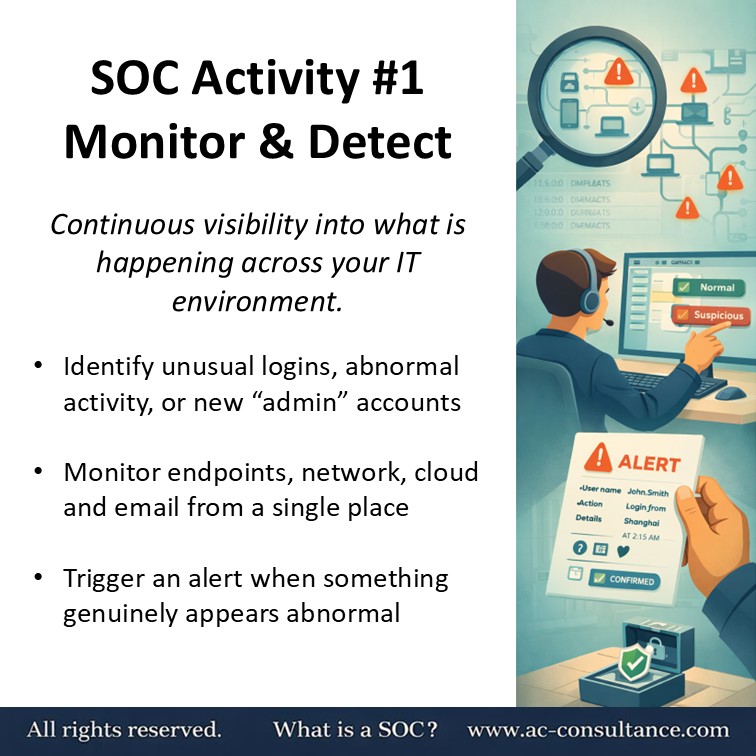
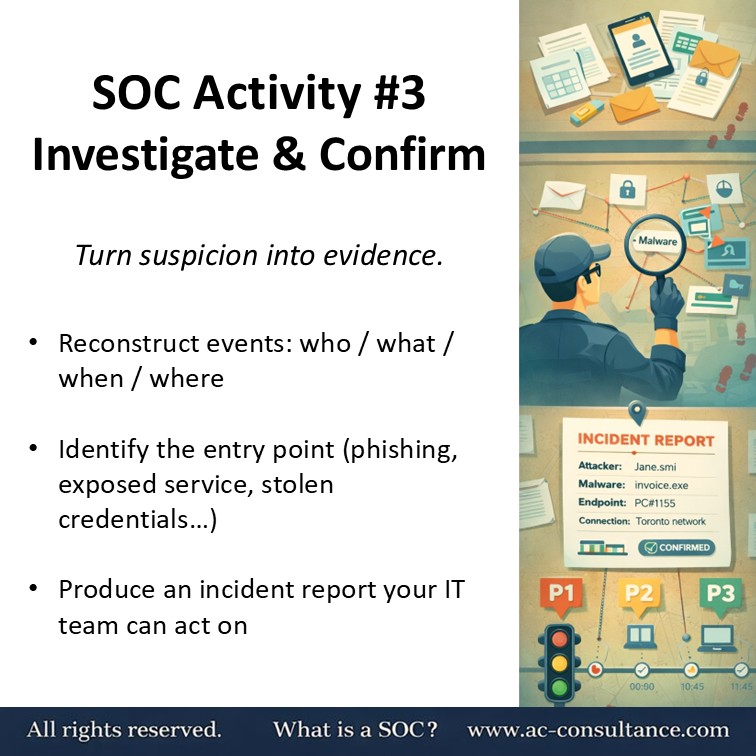
In real life, a SOC deals with noise: many alerts are not attacks, and a few are critical. The job is to triage, verify, correlate, and decide. A SOC collects events, detects anomalies (login attempts, suspicious execution, unusual traffic), investigates to understand impact, then orchestrates response with IT. A good SOC does not just put out the fire: it documents, fixes root causes, and strengthens controls to avoid repetition.
- Detection: identify abnormal signals and attack patterns.
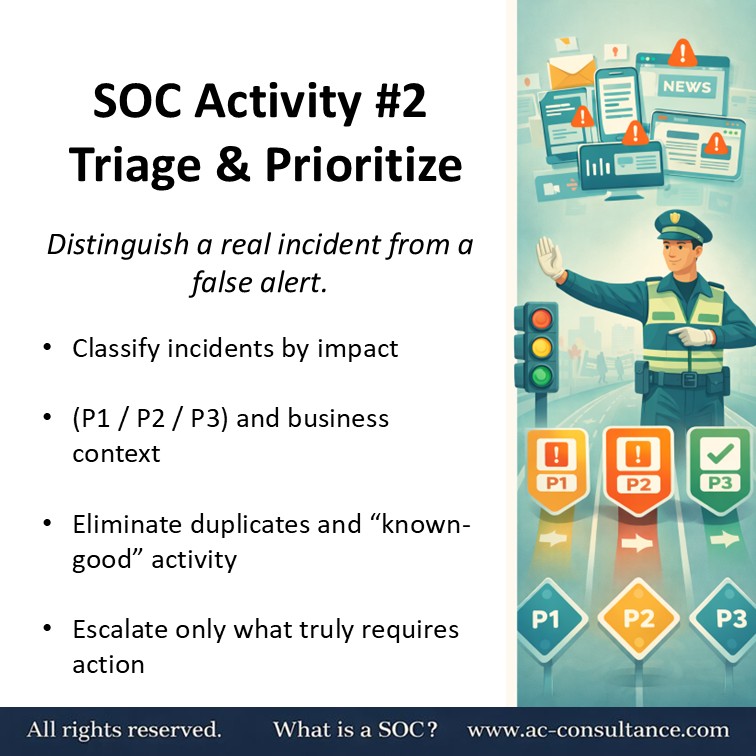
- Triage: false positive, minor incident, or confirmed attack.
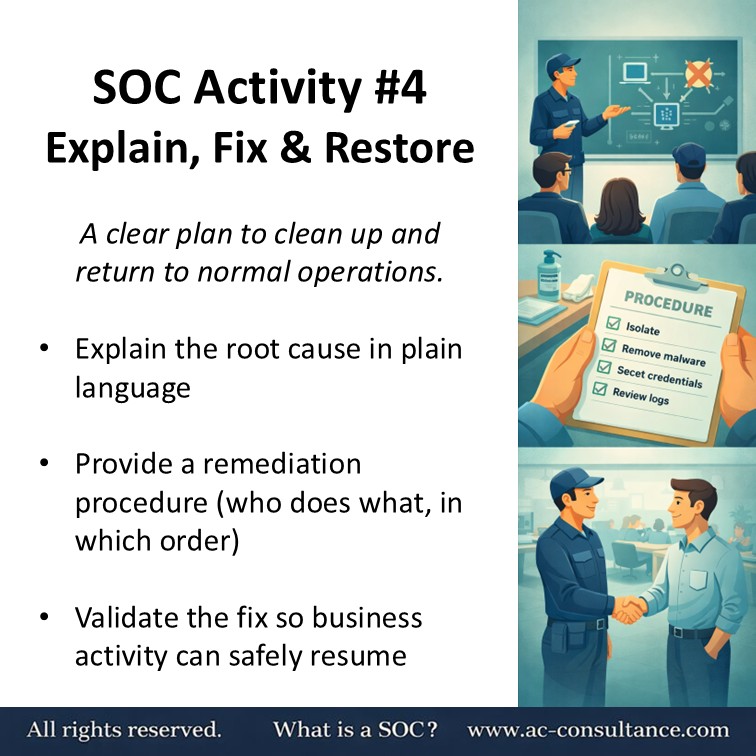
- Response: contain, remediate, restore, then learn (post-incident review).
3 - People, process, tools: the trio that makes the difference
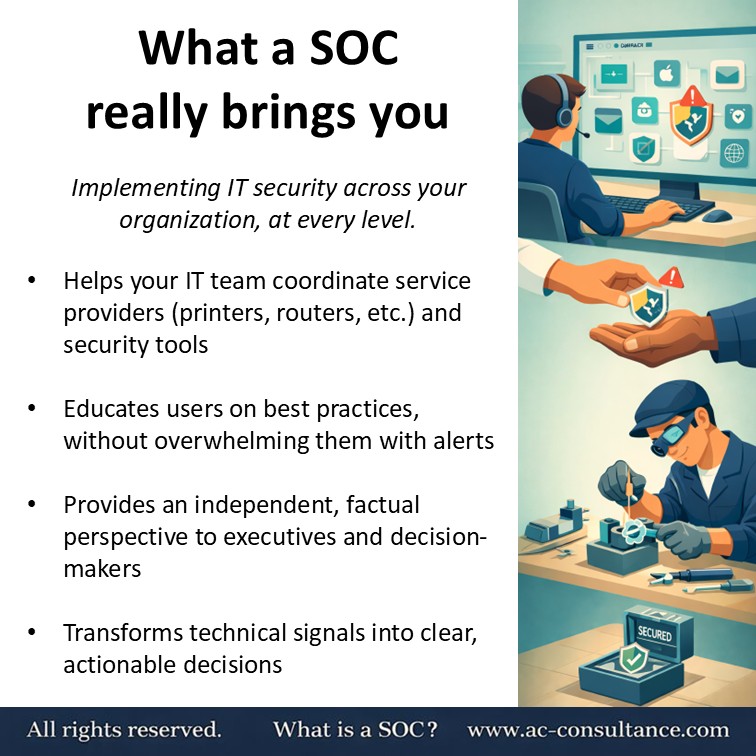
Tools alone are not enough: without clear responsibilities and procedures, an alert stays just another notification. A SOC defines who decides, who executes, and how escalation works based on severity. Procedures (playbooks) standardize response: which evidence to collect, which actions are authorized, when to inform leadership, when to isolate a machine. Tools (SIEM, EDR/NDR, asset inventory, ticketing) help collect, correlate, investigate, and keep an auditable record, including when working with a service provider.
- People: analysts, IT lead, decision maker, and business liaison.
- Process: severity, escalation, playbooks, evidence, documentation.
- Tools: SIEM, EDR/NDR, asset management, tickets, reporting.
4 - Useful metrics and common mistakes
A SOC is steered with a few simple metrics tied to risk: do we detect early enough, do we respond fast enough, and do we actually cover what matters. Metrics are useful only if they lead to decisions: improve a rule, reduce false positives, strengthen a control, or close a blind spot. Common mistakes are well known: believing a SOC is "automatic", ignoring asset inventory, piling up alerts without prioritization, or never formalizing response. A realistic SME SOC focuses first on business continuity and evidence.
- MTTD / MTTR: mean time to detect and to respond.
- False positive rate and quality of prioritization.
- Real coverage: what is actually monitored (and what is not).